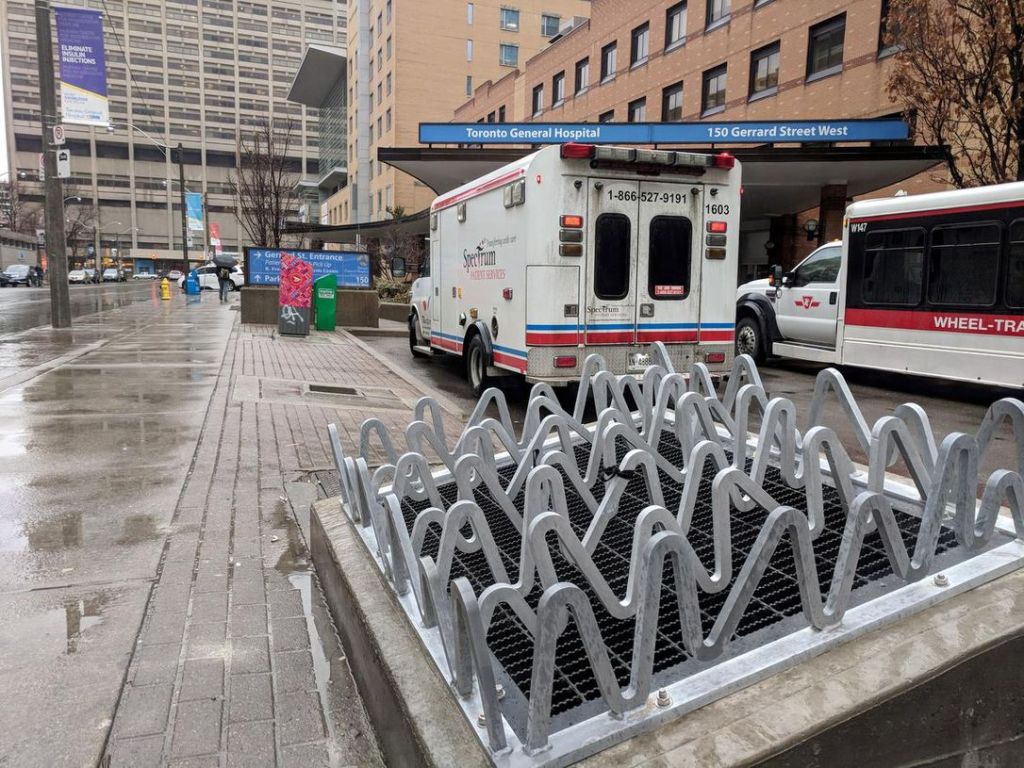
The above is a picture of a vent outside Toronto General hospital on which metal railings were installed. What might look like an abstract piece of art at first glance is actually a strategy to avert the homeless. Ironically, this is outside a place where people usually come to get help. While the backlash against this decision quickly caused the railings to be removed, Toronto is still littered with examples of similar structures.
This type of “hostile architecture” is designed to prevent spaces from being used in any other way than intended. The true purpose of these designs is often disguised under more “socially acceptable” motives, such as dividers to help protect peoples’ personal space or anti-skate barriers to prevent damage from skateboards. The ultimate consequence, however, is discouraging certain groups from using public spaces.
“I hardly noticed [hostile architecture] before I became homeless in 2009. An economic crisis, a death in the family, a sudden breakup and an even more sudden breakdown were all it took to go from a six-figure income to sleeping rough in the space of a year. It was only then that I started scanning my surroundings with the distinct purpose of finding shelter and the city’s barbed cruelty became clear.”
– A homeless man housed by Haven Toronto
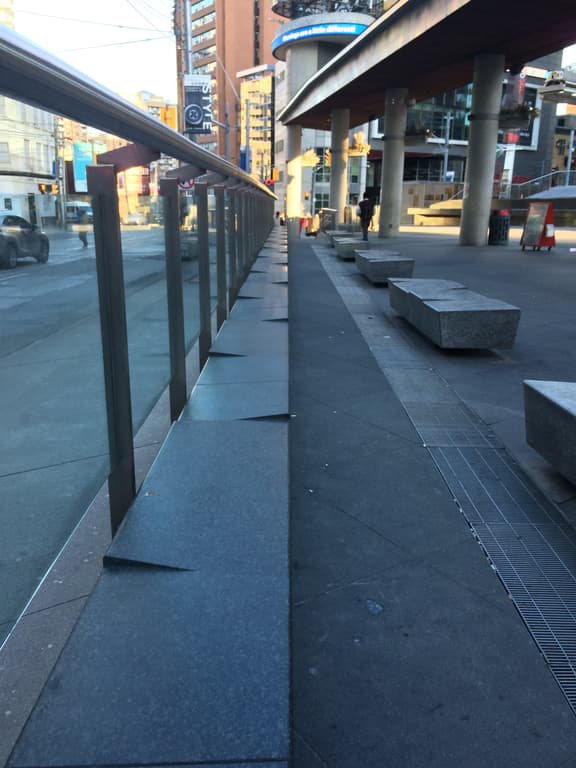
The seating ledge at Yonge-Dundas square shown above may not seem particularly special, but the alternating angles on the blocks are a tactic to prevent people from skateboarding and sleeping on them.
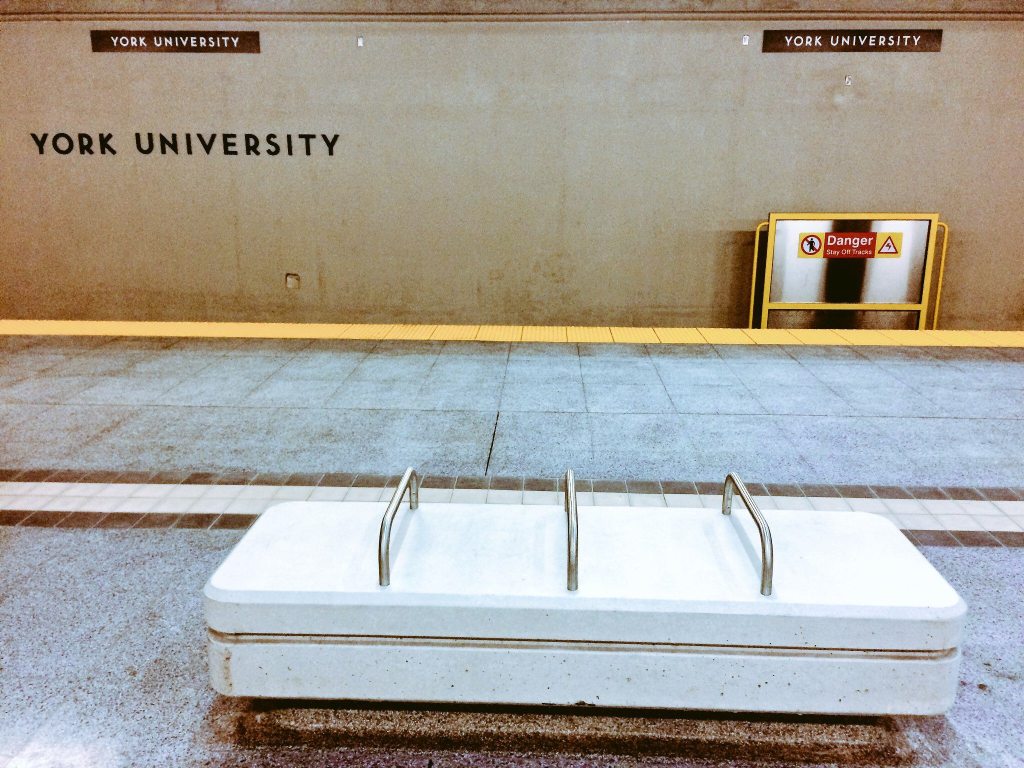
A more obvious example shown above is a bench at the York University subway station, which has metal dividers placed unusually close together to prevent people from laying down. This makes the bench less accessible to many, such as the elderly, the disabled, and pregnant women.
Lecturer Cara Chellew started the #DefensiveTO project to document hostile architecture around Toronto. The website features an interactive map that pinpoints the location of defensive designs. The list includes surveillance spots, which push people to leave over the fear of being watched, and ghost amenities, which are public spaces that lack seating and washrooms to deter loitering, making them inconvenient for those with accessibility needs.
“We’ve been using a form of defensive architecture for as long as we’ve had cities. But it’s really ramped up in the last 15 years or so since there’s been an increased focus on public space in city building. We’re creating public spaces but within public spaces there is the intention to keep public space orderly and maintained, to save on policing costs, or to reduce maintenance and vandalism.”
– Cara Chellew, Equal Times
The use of hostile architecture allows the city to push certain problems, like homelessness, out of the streets and into the shadows. For example, the Downtown Yonge BIA (Business Improvement Areas) installed planter boxes outside a Tim Hortons where Jay, a homeless man, is often found holding the door open for customers. According to CEO Mike Garner:
“This was an engagement with Jason to get him to accept housing and to get into the service and help that he needs. If we don’t engage in this capacity, then this young man’s going to be dying on the street and we don’t want that to happen.”
– Chief Operating Officer and Executive Director Mike Garner, CityNews
There are currently over 9,200 people homeless every night in Toronto, and the waitlist for subsidized housing is 11 years long. But instead of getting to the root of the homelessness and housing crisis, organizations try to remove problems from the public eye. This is dangerous, as it reduces general awareness for important issues and makes already stigmatized groups of people feel even less welcome in society.
Rather than making public spaces inhospitable for those who rely on it the most, the city should invest in fast-tracking their affordable housing project and improving the quality and capacity of homeless shelters. Rather than building benches with dividers that can injure children and displace the homeless, or placing barriers on concrete to prevent teenagers from skateboarding, the city should focus on creating welcoming public environments for all of its residents.
“Out of sight, out of mind” is not a viable value to hold if Toronto is to flourish and reach its full potential.
Sources Used:
“UHN apologizes for Toronto General vent grate that’s ‘hostile’ to the homeless” CBC Apr 04 2018
“How ‘defensive design’ leads to rigid benches, metal spikes, and ‘visual violence’ in modern cities” CBC Jul 02 2019
“Defensive, even hostile architecture can be found all over Toronto” Toronto Star June 14 2019
“‘Hostile architecture’ a growing problem for the homeless, advocates say” Toronto Star April 5 2018
“Mapping defensive urban design in Toronto” Spacing Toronto July 30 2019
“A major urban design trend is making Toronto less liveable” Local Love August 26 2019
“Downtown BIA installs planters to urge homeless man into housing” City News March 22 2018
“Bars, barriers and ghost amenities: Defensive urban design in Toronto” Torontoist February 12 2018
“Doors Open, But The Welcome Mat Is Gone” Haven Toronto May 24 2019
“Why Toronto Should Care About Unpleasant Design” Designlines Magazines April 25 2018
“What’s behind the rise in defensive design?” Equal Times August 19 2019
‘We’re everywhere now’: Meet the homeless in Canada’s largest city” CBC December 26 2019
 g l a s s m a z e . c o
2 replies on “Long Blog 3 – Shoved into the shadows”
Until reading this blog post, I had no idea that these railings on benches are something that are so controversial. I just assumed that it was a divider for different people to remain separated, and have their own space while seated. It is very upsetting to think that it is actually a strategy to avert the homeless. I agree with you, when you say that rather than spend money on these dividers, that money should go towards homeless shelters.
LikeLike
Awesome blog post Rekha! Until reading your blog post, I had never realized how much “artwork” or “creative designs” around the city were created not as a way to improve the aesthetic of the city, but instead, to avert homeless people from using certain public facilities. It’s sad seeing how the city had to hide their true intentions behind making artwork around the city. I think the first image you showed in your blog post was really well chosen because I never would’ve thought that that artwork on top of the vents served this purpose. Overall, great blog post. I think whoever reads this blog post will be able to exercise increased awareness when walking around the city from now on.
LikeLike